What Is PMI? Private Mortgage Insurance Explained for Murrieta and Temecula Buyers
By Laura Holbert & Cheryl Shadden · October 30, 2026 · 6 min read
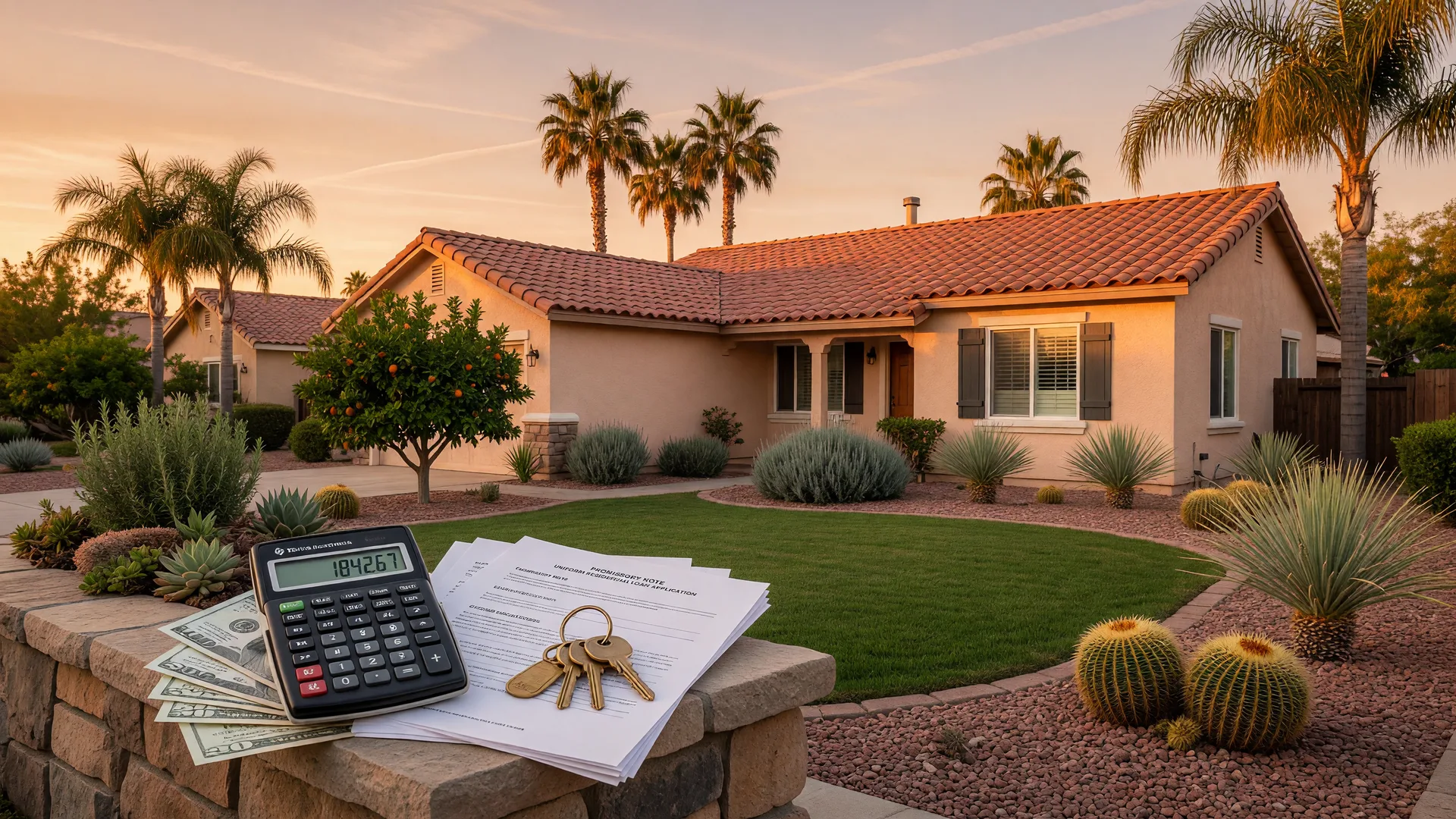
If you are buying a home in Murrieta, Temecula, or Southwest Riverside County and plan to put down less than 20 percent, you are going to hear about private mortgage insurance, or PMI. PMI is a monthly premium that protects the lender if you stop making payments, and it is standard on conventional loans with a down payment under 20 percent. This guide explains what PMI costs, when it is required, and the honest ways to avoid it or drop it once you qualify.
What Is Private Mortgage Insurance (PMI)?
Private mortgage insurance is a type of insurance that comes with a conventional mortgage when the loan-to-value ratio is above 80 percent. It protects the lender, not you. If a borrower defaults, the insurance company reimburses the lender for part of the loss, and that is what lets lenders offer home loans with 5 or 10 percent down.
PMI is not the same as homeowners insurance, which protects your home and belongings, and it is not the same as title insurance, which protects against ownership disputes. PMI is simply the cost of borrowing with less than 20 percent down. It is usually folded into your monthly mortgage payment automatically and shown separately on your Loan Estimate and Closing Disclosure, so you can always see it.
How Much Does PMI Cost?
PMI typically costs about 0.5 percent to 1.5 percent of the loan amount per year, billed monthly. The exact rate depends on your credit score, the size of your down payment, the loan amount, and your lender.
On a $650,000 home with 10 percent down, the loan amount is $585,000. At 0.5 percent per year, PMI runs about $2,925 a year, or roughly $244 per month. At 1 percent, it is closer to $488 per month. These are illustrations, not quotes; your lender gives you the exact number for your file. The larger your down payment and the stronger your credit, the lower your rate.
When you compare financing, ask every lender for the complete monthly payment including PMI, taxes, insurance, and HOA dues, so you are comparing the real number and not a headline rate. That full-picture math is exactly what we walk through in our guide to how much house you can afford and our pre-approval checklist.
When Is Mortgage Insurance Required?
PMI is required on conventional loans when the down payment is under 20 percent. It is also not the only form of mortgage insurance you will hear about:
FHA loans work differently. They charge an upfront mortgage insurance premium of 1.75 percent of the base loan amount, which can be financed into the loan, plus an annual mortgage insurance premium of about 0.55 percent for most 30-year loans under current HUD policy. FHA mortgage insurance generally cannot be canceled just because you reach 80 percent loan-to-value. For 30-year loans with less than 10 percent down, it stays for the life of the loan; with 10 percent or more down, it drops off after about 11 years. The usual path out is refinancing into a conventional loan later, and our FHA loan guide for first-time buyers covers this in depth.
USDA loans charge an upfront and annual fee instead of PMI, for the rural and semi-rural areas where they apply.
VA loans are the standout for military families: no PMI and no monthly mortgage insurance at all, with a funding fee that can be waived for veterans with a service-connected disability. That is one more reason to understand your VA loan buying power before you shop, and our military relocation page lays out the full picture for families moving to the area.
Five Honest Ways to Avoid PMI or Drop It Later
1. Put 20 percent down. This is the direct way, and it removes PMI from day one. The honest part: most of the homes we help families buy in this area fall between $600,000 and $900,000, where 20 percent is $120,000 to $180,000, and saving that takes time for many buyers. It is worth comparing what renting while you save costs you in that same period, and our rent versus buy guide helps with that math.
2. Ask about lender-paid mortgage insurance, or LPMI. The lender pays the premium and raises your interest rate instead. You avoid a separate PMI line, but you pay more interest for the life of the loan. Run both scenarios with your lender before you choose.
3. Compare other loan programs. FHA, VA, USDA, and California down payment assistance programs all change the equation. Sometimes a loan with no PMI sounds better but the program costs more overall. Look at the total monthly payment, not just the acronym.
4. Request cancellation at 80 percent loan-to-value. Under the Homeowners Protection Act, for loans closed on or after July 29, 1999, you can ask your lender in writing to cancel PMI when your balance reaches 80 percent of the original value, and the lender must comply in most cases when your loan is current. Many loans also drop PMI automatically when the balance is scheduled to reach 78 percent. Keep paying on time, track your balance, and ask.
5. Refinance once you have 20 percent equity. For FHA loans with life-of-loan mortgage insurance, refinancing into a conventional loan once you have built enough equity is the standard way to remove it, when rates and closing costs make the math work. Our closing costs guide is a good starting point for estimating what that switch would cost.
Does PMI Mean You Should Wait to Buy?
Not by itself. PMI is one line in the total payment. A purchase with 5 or 10 percent down lets you build equity now, and your payment stays fixed while rents keep rising. Waiting to save the full 20 percent means renting longer and watching prices and rates from the sidelines.
That does not mean buying with a small down payment is right for everyone. If the PMI line makes the monthly payment uncomfortable, the honest answer may be to save a little longer, buy at a lower price point, or use a program that fits your situation. The right answer depends on your savings, your income, and your timeline. What matters is deciding with the real numbers in front of you rather than a rule of thumb.
Run the Real Monthly Payment Before You Tour
At Team Integrity Realty, Laura Holbert and Cheryl Shadden believe in education-first guidance. Before you fall for a house, we want you to know the complete picture: purchase price, down payment, loan amount, interest rate, PMI or mortgage insurance, property taxes, insurance, HOA dues, and Mello-Roos. Then you tour homes that genuinely fit your budget, and the whole process feels calm instead of stressful.
We are happy to walk through the numbers with you and connect you with lenders we trust. There is no cost and no obligation: most people reach out long before they are ready to make an offer, and that is exactly when the conversation is most useful. Start with our first-time buyers hub or the full buying guide, or just call us.
Laura Holbert, Broker, CA DRE #01932682
Cheryl Shadden, Broker, CA DRE #01932888
Team Integrity Realty