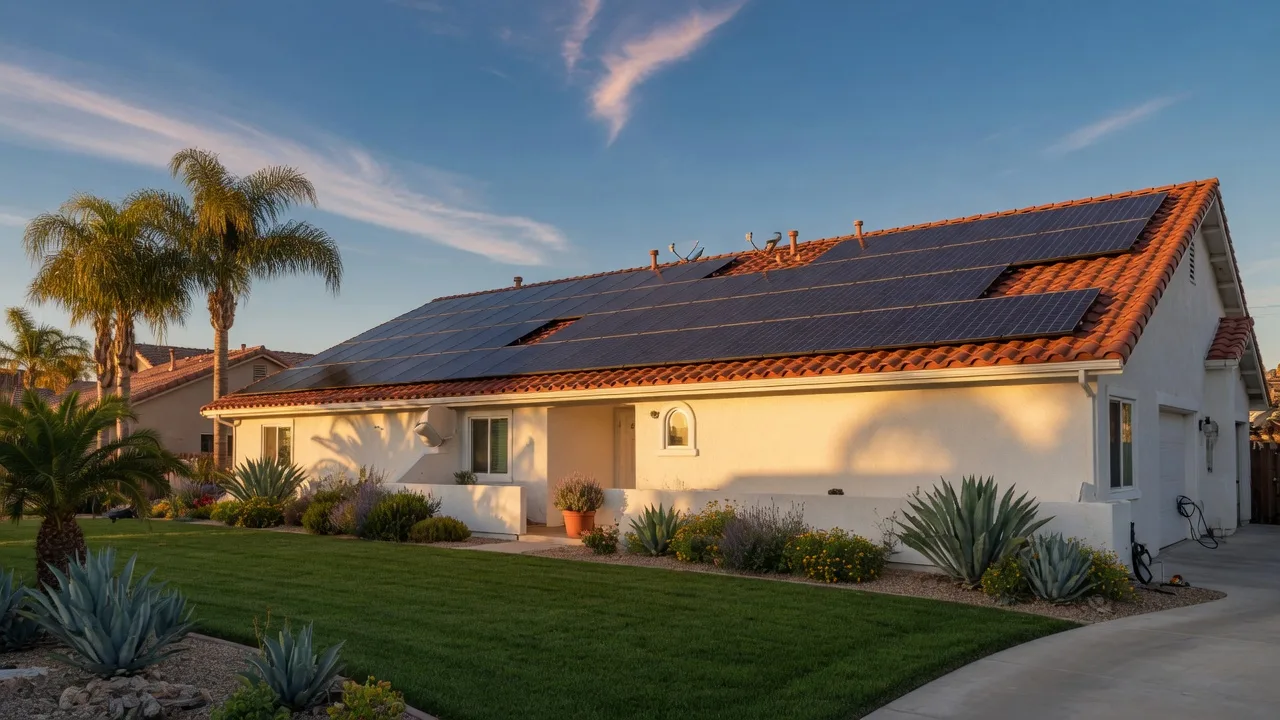
A home with solar can be a genuine advantage in a region with this much sunshine, but the panels are only part of the story. The real question is whether the system is owned outright, financed with a loan, or owned by a third-party solar company under a lease or power purchase agreement. Know that difference before you write an offer.
Laura Holbert and Cheryl Shadden of Team Integrity Realty believe in education-first support, and solar is one of the areas where a little knowledge saves the most money. Our Buying Guide walks through the entire process; this article covers the solar-specific details buyers ask us about most.
Who Owns the Panels Is the Question That Matters
Four arrangements describe almost every home with solar. The system may be owned outright with no money owed, or owned but carrying a solar loan with a balance to resolve at closing. It may be leased, with the solar company charging a fixed monthly payment, or run under a power purchase agreement (PPA), charging per kilowatt-hour produced.
The MLS listing often says only "solar," and that one word rarely tells you which situation you are in. Ask your agent to pull the ownership details early.
Owned Solar: The Cleanest Scenario
When panels are owned outright, the system conveys with the house. There is no contract to assume, no monthly payment, and no third party to satisfy, which makes this the simplest and generally most valuable situation. An appraiser can credit an owned system when valuing the home, and research from Lawrence Berkeley National Laboratory has found that owned solar can add measurable resale value.
If you are looking at an owned system, ask for proof: the installation contract or bill of sale, the warranties, and any production history. A seller with an owned system is usually happy to share these.
Solar Loans: Owning With a Balance
A solar loan means the homeowner owns the panels but still owes money on them. At closing, that balance must be paid off from the seller's proceeds, or the buyer must be allowed to assume the loan with the lender's permission. It is a negotiation point that needs to be settled before you remove contingencies, not discovered at the title stage.
Solar loans are often secured by a UCC-1 fixture filing on the equipment. That filing must be released or subordinated so your new mortgage stays in the first lien position, and an unresolved filing can delay closing. If a buyer assumes the payment, it counts toward your debt-to-income ratio, which can reduce how much you can borrow. Get the payoff statement early.
Leases and PPAs: When the Solar Company Owns the System
Leased systems and PPAs surprise buyers most. The homeowner does not own the equipment; the solar company does. To take over the arrangement, the buyer typically has to pass the solar company's credit review and sign an assumption agreement, or the seller has to buy out the contract before closing.
Third-party-owned systems carry two financial realities. First, because the homeowner does not own the panels, appraisers generally do not credit them toward the value of the home, so a leased system does not add the same resale value as an owned one. Second, the monthly lease or PPA payment counts toward your debt-to-income ratio, which reduces the mortgage you can qualify for.
One more detail matters for veterans and active-duty buyers: FHA and VA loans generally cannot assume a third-party solar lease or PPA. If you plan to finance with one of those programs, a seller who will not buy out the contract can narrow your options. Our military and VA loan page is a good place to start.
NEM 2.0 vs NEM 3.0: The Utility Agreement Behind the Panels
Beyond who owns the equipment, the utility agreement matters. Older California systems were grandfathered onto net metering, which credited exported power at the full retail rate. Systems connected after mid-April 2023 fall under California's net billing tariff, often called NEM 3.0, which credits exports at the utility's avoided cost, far lower than the retail rate older customers receive. A home battery is more valuable under the newer rules because it shifts your solar power into the evening.
What does this mean for a buyer? The system's age, its interconnection agreement, and whether a battery is attached all shape its value. Ask to see the interconnection agreement and the current utility bill. For new construction, our guide to buying new construction in Southwest Riverside County covers what to ask when a builder includes solar.
Documents to Request Before You Remove Contingencies
If the home you want has solar, gather these before your inspection contingency expires:
- The complete solar agreement, whether lease, PPA, or loan
- Proof of ownership, such as the installation contract or bill of sale
- A transfer or assumption agreement signed by the solar company
- Panel, inverter, and workmanship warranties
- The interconnection or net-metering agreement and a copy of the current solar bill
- Production history or monitoring access
- A payoff statement or buyout quote, if there is a balance
- Any UCC-1 or fixture filing details
This list mirrors what your lender, escrow, and title officer will ask about. Getting it early avoids surprises, alongside the paperwork our article on red flags when buying a home in Murrieta and our guide to home appraisals in Murrieta and Temecula recommend you review.
Questions to Ask About Any Solar Home
- Is the system owned, financed, leased, or a PPA?
- What is the remaining term, and what happens at the end of it?
- What is the monthly payment, and does it have an annual escalator?
- Who must approve the transfer, and what does the approval require?
- How old are the panels, inverter, and roof, and are all warranties transferable?
- Does the current utility agreement transfer to a new owner, and what rate does it credit?
- Would a leased system affect the loan program you plan to use?
These questions fit naturally into your monthly budget, because a lease payment changes what you can afford. Start with our guide to how much house you can afford in Murrieta and the pre-approval checklist, then use the mortgage calculator to compare your numbers.
The Bottom Line
Solar can be a wonderful feature of a home, and in Southwest Riverside County it is increasingly the norm. The key is knowing which kind of solar you are buying. Owned systems are the simplest and typically the most valuable. Loans add a balance to resolve and a filing to clear. Leases and PPAs add a contract to assume and a payment that counts against your buying power.
None of this should scare you off a home with panels. It should simply be part of the plan, and it is a clear example of why honest, transparent guidance matters. We have walked clients through every one of these structures, and we would rather help you understand the details now than watch them surface during escrow. If you are weighing an offer on a solar home, or pricing one correctly on the selling side, call us or book a time to talk. There is never any obligation.
Buying or Selling a Home With Solar?
Whether you are shopping in Murrieta or Temecula, negotiating an offer on a home with panels, or preparing to sell your own solar home, we would love to help you sort through the details with a lender and title team you can trust. Call Laura at (951) 704-4635, or book a time to talk. No obligation, just honest guidance.
Laura Holbert · CA DRE# 01932682 · Cheryl Shadden · CA DRE# 01932888
Related Resources

Laura Holbert
Real Estate Broker, REALTOR® · CA DRE# 01932682 · Certified Negotiation Expert (CNE)
(951) 704-4635 · Laura@TeamIntegrityRealty.com

Cheryl Shadden
Real Estate Broker, REALTOR® · CA DRE# 01932888 · Certified Negotiation Expert (CNE)