Property Taxes and Mello-Roos in Murrieta and Temecula: What Home Buyers Should Know
By Laura Holbert & Cheryl Shadden · September 29, 2026 · 8 min read
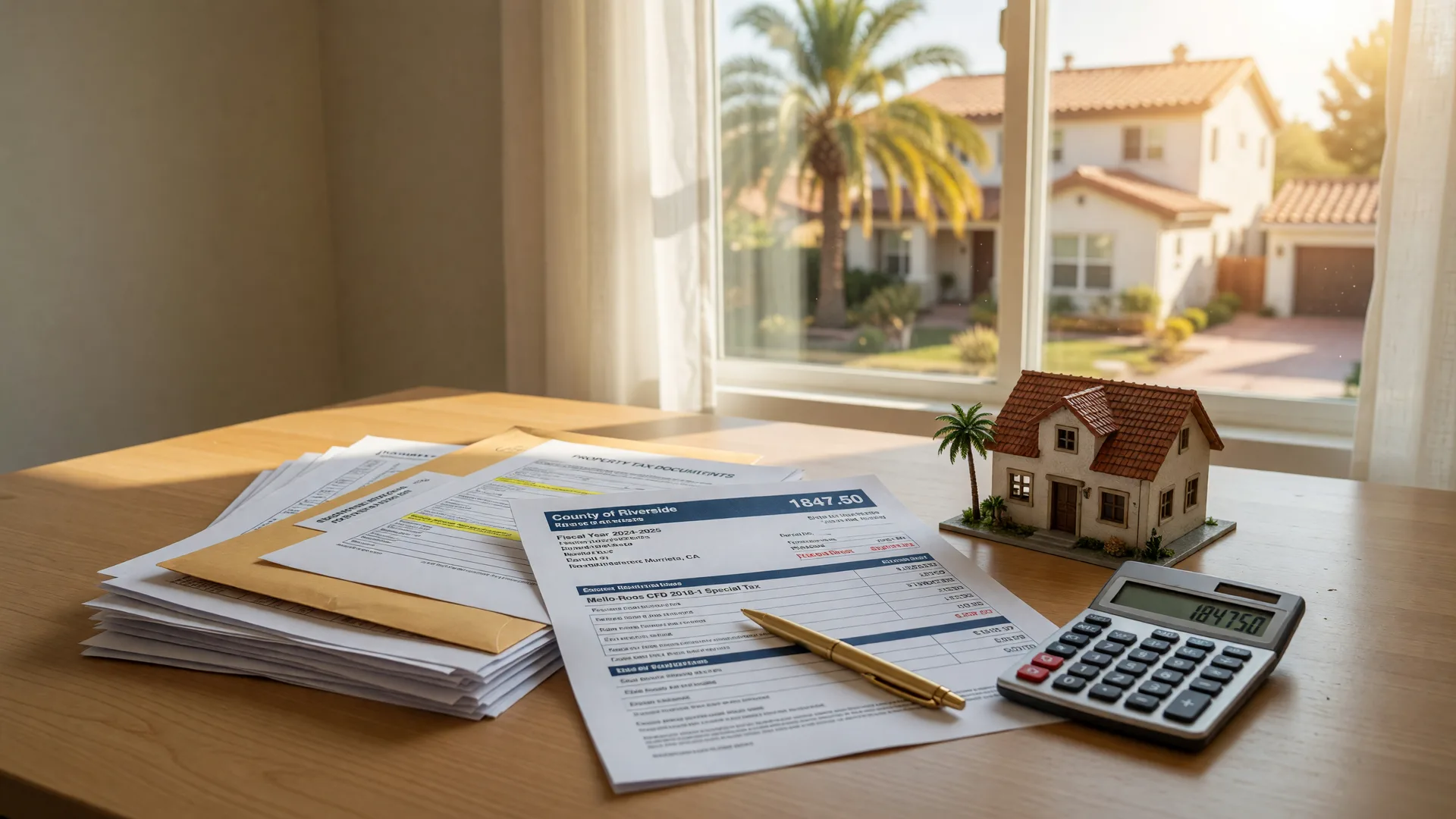
Property taxes are one of the least understood parts of buying a home in Murrieta, Temecula, and Southwest Riverside County, and one of the most important to get right. In California, your annual tax bill is built from a base rate, voter-approved bonds, special assessments like Mello-Roos, and sometimes a supplemental bill after closing. Laura Holbert and Cheryl Shadden of Team Integrity Realty walk every buyer through the tax record before they write an offer, so the payment you plan for is the payment you actually get. This guide explains each piece in plain language and what to check before you sign.
No two properties are taxed the same way, even on the same street. The good news is that the information is public and easy to verify with the right help. Here is how it all works.
The 1% Base: How California Property Taxes Work for a New Owner
California's property tax system starts with Proposition 13, which caps the base property tax at about 1% of a home's assessed value. When you buy, the county assessor reappraises the home at your purchase price, and that becomes your annual base tax. The assessed value can then grow by no more than 2% per year, which is why long-term homeowners in Murrieta often pay far less in base tax than a new buyer on the same block.
On top of that base, most homeowners also pay voter-approved bonds for schools, parks, and public improvements, which appear as separate line items that vary by tax rate area. The practical takeaway: the old owner's tax bill is almost never what you will pay, so plan your budget around the purchase price.
What Is Mello-Roos? Community Facilities Districts Explained
Mello-Roos is the nickname for a Community Facilities District, or CFD, created under California's Mello-Roos Community Facilities Act of 1982. Cities and counties use CFDs to pay for new-community infrastructure: roads, sewers, water lines, schools, parks, fire stations, and utilities. When a district is formed, bonds are issued to build it, and homeowners inside repay them through an annual special tax on the property tax bill, typically over 20 to 40 years.
Two things about Mello-Roos surprise most buyers: it is a tax, not an HOA fee, and it appears as its own line item on the tax bill. Second, it is not protected by Proposition 13's 1% cap, so the amount is set by the district and can change over time. That is why two homes a block apart can have very different annual tax bills.
Why Mello-Roos Matters So Much in Southwest Riverside County
Much of Murrieta and Temecula was built as master-planned communities, and many newer developments sit inside one or more Community Facilities Districts. In Temecula, most subdivisions built after 1990 carry at least some special assessment. In Murrieta, communities like Greer Ranch and Murrieta Oaks have active Mello-Roos bonds, and The Colony at California Oaks carries special assessments too. Across the area, newer communities frequently run an all-in tax rate of roughly 1.8% to 2.2% of the purchase price per year once base rate, bonds, and assessments are combined.
To see what that means, consider a home in the $600,000 to $900,000 range we work with across Murrieta and Temecula. At the 1% base rate, the annual bill on a $750,000 home is about $7,500. Add bonds and a Mello-Roos assessment, and the same home could carry an annual bill of $14,000 or more in a higher-assessed community. That difference is real money in your monthly payment, and it is why we review the tax record with every buyer before they write an offer. Our guide to how much house you can afford in Murrieta shows how taxes fit into the full picture.
The Supplemental Tax Bill: The Bill That Arrives After Closing
Here is the surprise that catches many first-time buyers: after you close, Riverside County reassesses the home to your purchase price and may issue a supplemental tax bill for the difference between the old assessed value and the new one. The bill is prorated from your purchase date to the end of the fiscal year and commonly arrives months after closing.
A supplemental bill is normal, not a mistake, and lenders often build a tax impound account into your monthly payment so the money is ready when it arrives. If you are budgeting on your own, set aside a cushion for it. Understanding this before closing prevents the most common budget surprise we see, and it is one reason our Buying Guide spends real time on ongoing ownership costs.
How to Check the Tax Record Before You Make an Offer
The exact tax bill for a specific home is public information, and you should never rely on what a neighbor pays or what the seller remembers. Before you make an offer, ask for the current property tax record and review it line by line: the base assessed value, any bond levies, and each special assessment, including the Mello-Roos amount and years remaining on the bond. Your agent can pull the county tax roll for the exact parcel.
This is also the moment to separate the tax bill from HOA dues. Our neighborhood guides, like the one for Murrieta Oaks, note where assessments are part of the picture, and our full neighborhood index covers communities across the area. With new construction, ask the builder for the projected tax and assessment figures in writing, because the numbers quoted at the sales office are estimates, not guarantees. Our new construction guide covers the other questions worth asking.
Questions to Ask About Taxes on Any Home You Consider
When we tour homes with buyers, we ask the same tax questions every time:
- What is the current annual property tax bill and the assessed value behind it?
- Is the home inside a Mello-Roos or special assessment district, and how much is it?
- How many years remain on any bond, and can the assessment change?
- Are there HOA dues on top of the tax bill, and what do they cover?
- Will there be a supplemental tax bill after closing, and how large?
Those five answers and your loan terms give you a monthly ownership cost you can trust. Our mortgage calculator lets you fold taxes and insurance into the payment yourself, and our closing cost guide covers the upfront side.
Taxes Should Never Be a Surprise
The goal is simple: you should know your true monthly cost before you make an offer, not discover it after moving in. Laura Holbert and Cheryl Shadden built Team Integrity Realty on honest guidance and transparent communication, and that starts with the numbers nobody likes to talk about. We review tax records with every buyer and explain each line item in plain language. You can read more about how we work on our About page, see what past clients say on our Reviews page, and find answers in our FAQ.
Most buyers reach out long before they are ready to make an offer, and that is exactly what we encourage. Whether you are comparing neighborhoods or wondering what a home really costs each month, a short conversation can turn an overwhelming process into a clear path.
Selling a property? See our seller-focused guide to property taxes and Mello-Roos in Murrieta.
Laura Holbert & Cheryl Shadden
Real Estate Broker, REALTOR® · CA DRE# 01932682 & 01932888 · Team Integrity Realty
Have a Tax or Budget Question Before You Buy?
We would love to pull the numbers on any home you are considering and walk you through the true monthly cost, with no obligation. Call Laura at (951) 704-4635 or book a time to chat.