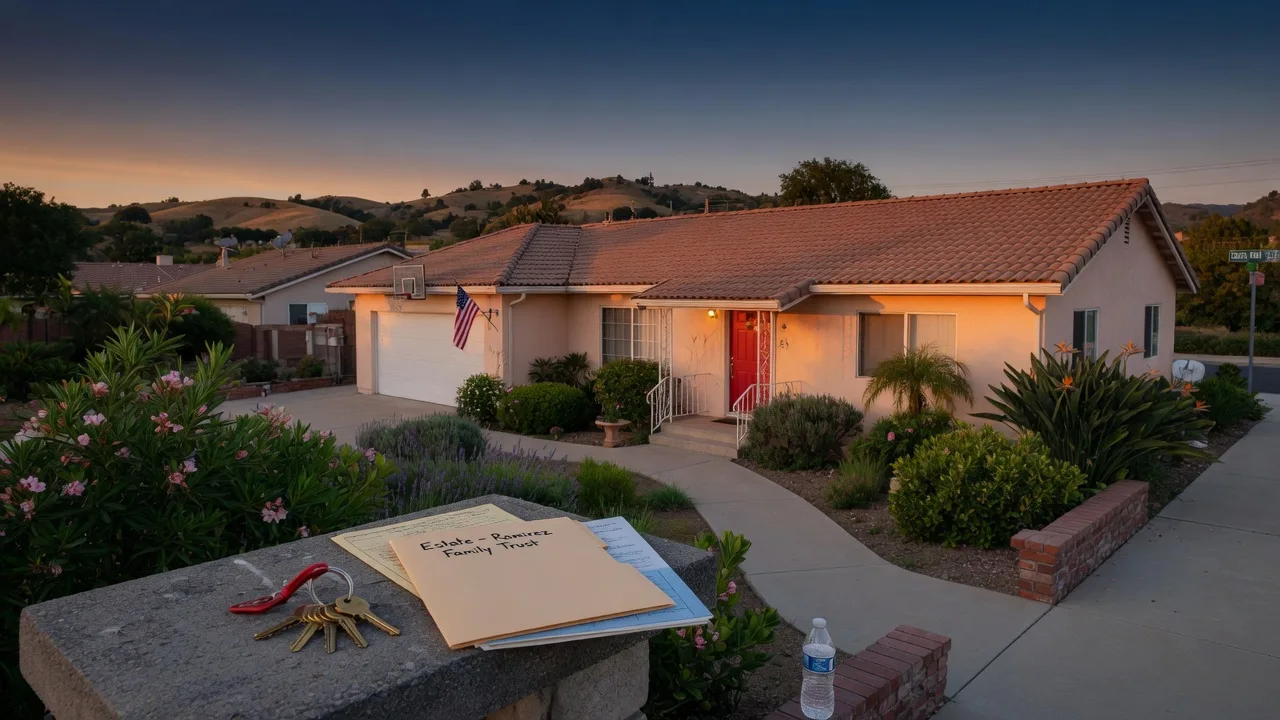
An inheritance usually comes during a difficult time, and the last thing a family needs is to feel rushed into a decision about a home. The good news is that you have time, and the smartest first move is not selling or signing anything. It is understanding what you actually inherited: the deed, the mortgage, any property taxes owed, the insurance, and more importantly, who is legally entitled to act on the property. From there, every other choice becomes clearer.
Laura Holbert and Cheryl Shadden, both California real estate brokers and experienced estate-transition guides, explain in plain language how to sort out an inherited home. Our Probate and Estate Guidance page walks through the territory, and this article answers the questions families ask us most often when a house enters a new chapter.
Who Has the Legal Authority to Act?
The single most important question is not what the house is worth. It is who can make decisions about it. If the home was held in a living trust, the successor trustee named in the document usually steps into the role and can manage or sell the property without a court process. If there was no trust, the estate may need to go through probate: a court-supervised process in which a personal representative, also called an executor, is appointed to gather assets, pay debts, and distribute what remains.
Until that authority is established, you generally should not move in, change the locks, or put the house up for sale. A family that lists a home before the estate documents are sorted can waste weeks or lose a buyer. That is why estate attorneys exist, and why an experienced team matters: we coordinate with the attorney so the real estate side of the process stays in sync with the legal side.
Stepped-Up Basis: The Tax Rule That Changes Everything
Under federal tax law, inherited property receives a stepped-up cost basis: the home's tax basis becomes its fair market value on the date of the original owner's death, rather than the price the owner originally paid decades ago. For many families this means that selling the home soon after the inheritance produces little or no capital gains tax, because the sale price and the stepped-up basis are so close.
This is the rule that changes the math on inherited houses, and it is also the reason you should not assume the old purchase price or the old mortgage tells you anything about your tax situation. Get a realistic valuation of the property as of the date of death and review it with a tax professional before you make a decision. We are happy to share what similar homes have sold for, and our home valuation resources help you start that conversation with real local numbers.
Property Taxes and Proposition 19
In California, whether an inherited home keeps its old property tax assessment depends on the rules under Proposition 19. When a parent passes a primary residence to a child, the child can keep the base-year assessed value in many situations, provided they make the home their own primary residence and claim the homeowners exemption in a timely way. Other inherited properties, such as second homes or rentals, are generally reassessed at current market value, which can mean a noticeably higher property tax bill.
The details matter, so this is a question to confirm with a tax advisor or the county assessor's office rather than guess. Because the answer can change how much annual tax the new owner pays, it should come before you decide whether to keep the home long term. Our guide to Proposition 19 and California property taxes covers the transfer rules in more depth.
Keep It, Sell It, or Rent It: The Real Options
Once authority and taxes are understood, the decision usually comes down to three paths.
Keep it. This makes sense when you will actually live in the home, when the mortgage, property taxes, insurance, and upkeep fit your budget, and when the family is comfortable with the arrangement. If more than one person inherits the house, keeping it means agreeing on how costs and decisions are shared, which should be written down, not assumed.
Sell it. This is the most common path when no one plans to move in. The proceeds are distributed according to the will or trust, and a sale often gives every family member a clean result. For an estate in probate, the court oversees the process; our detailed post on probate and estate sales in Murrieta explains exactly how that works.
Rent it. A rental can produce income, but it also makes you a landlord, with maintenance, vacancy, tenants, and a different tax picture. Rental properties also do not qualify for the same property tax protections in some inherited situations, so the reassessment question above becomes central before you choose this path.
No option is right or wrong on its own. The right answer depends on your family's finances, your plans, and how the home fits your life. That is why we never push families toward a choice. We lay out the trade-offs honestly and let you decide.
If You Sell an Inherited Home, Expect the Process to Be Thorough
Selling an inherited home follows the same steps as any California sale, plus a few extra layers. The home may have been vacant or largely untouched for a while, so it usually needs cleaning, repairs, decluttering, and often light staging before buyers can picture themselves there. Seller disclosures still apply, and inspections still matter, sometimes more, because an unoccupied house can hide issues no one has noticed.
If the estate is in probate, extra approvals and timelines come into play, and the listing agent must be comfortable operating within those rules. We have guided families through this exact process in Southwest Riverside County, and our Selling Guide covers the full path, from preparation to close, including the fees and net proceeds you can expect.
Why Experience With Family Transitions Matters
An inherited home almost always arrives inside a bigger story: a parent's passing, a difficult relocations, a family deciding what happens next. That is emotional territory as much as financial territory. Laura and Cheryl bring years of experience helping families downsize, move senior parents, and sort out estates, with designations including Certified Probate Real Estate Specialist (CPRES) and Certified Military Relocation Professional (MRP). They coordinate with estate attorneys, tax advisors, and cleanout and moving services so you are not managing every detail alone.
You can learn more about who they are on our About page, and families navigating a senior parent's home transition often start with our resources for senior clients and families. The principle is the same in every situation: honest guidance, clear communication, and support from start to finish.
You Do Not Have to Have It Figured Out Before You Call
Most families reach out with nothing more than a set of questions: Do I need to probate this house? What will the taxes be? Can we afford to keep it? What would it sell for? A conversation simply lays out what you inherited, which decisions are actually on the table, and who else should be involved, so you can make a calm, confident choice when you are ready.
Inherited a Home and Not Sure What Comes Next?
Whether the house is in Murrieta, Temecula, or anywhere in Southwest Riverside County, we can help you understand your options and the real numbers. Call Laura at (951) 704-4635, or book a time to talk. No obligation, just honest guidance.
Laura Holbert · CA DRE# 01932682 · Cheryl Shadden · CA DRE# 01932888
Related Resources

Laura Holbert
Real Estate Broker, REALTOR® · CA DRE# 01932682 · Certified Probate Real Estate Specialist (CPRES)
(951) 704-4635 · Laura@TeamIntegrityRealty.com

Cheryl Shadden
Real Estate Broker, REALTOR® · CA DRE# 01932888 · Certified Negotiation Expert (CNE)